




















































Canada’s opening game at the FIBA U17 Basketball World Cup followed a familiar pattern of control, response, and late breakdown, as Lithuania closed strongly to secure a 103–89 victory in Group B action in Istanbul.
The game featured 15 lead changes and 14 ties, reflecting just how evenly matched the opening three quarters were. Canada at times looked in command, but Lithuania consistently responded to every push, keeping the margin tight heading into the final quarter.
The opening half offered little separation. Canada held a 24–21 edge after the first quarter, but Lithuania answered in the second to take a slim 51–50 lead into halftime. Neither side could establish sustained momentum, with the lead changing hands repeatedly before Canada produced its best stretch midway through the third quarter. Facing a 63–61 deficit, the Canadians closed the period on a 10–2 run, sparked by improved transition play and defensive rebounding, to take a 71–65 lead into the fourth.
The momentum, however, shifted immediately after the break.
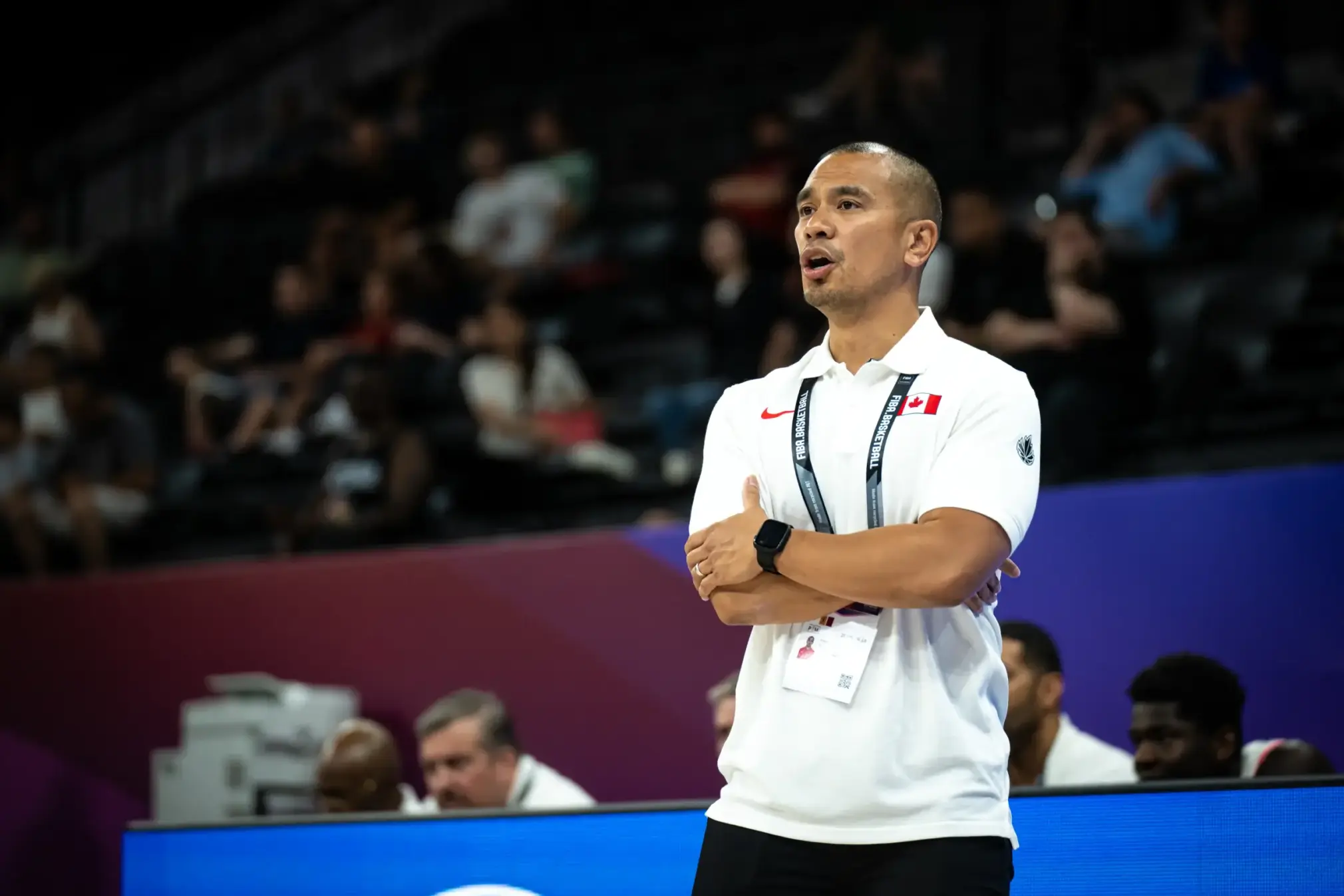
Lithuania opened the final quarter with a 15–6 run that flipped the game before Canada could stabilize. Head coach Chris Cheng called a timeout with 4:47 remaining and Lithuania leading 82–77, but the shift had already taken hold. From there, Lithuania dictated tempo and extended the margin, outscoring Canada 38–18 in the fourth quarter to close out the win.
The difference came down to execution under pressure, shot selection, and half-court efficiency, where Lithuania consistently generated higher-quality looks while forcing Canada into tougher possessions late in the clock.
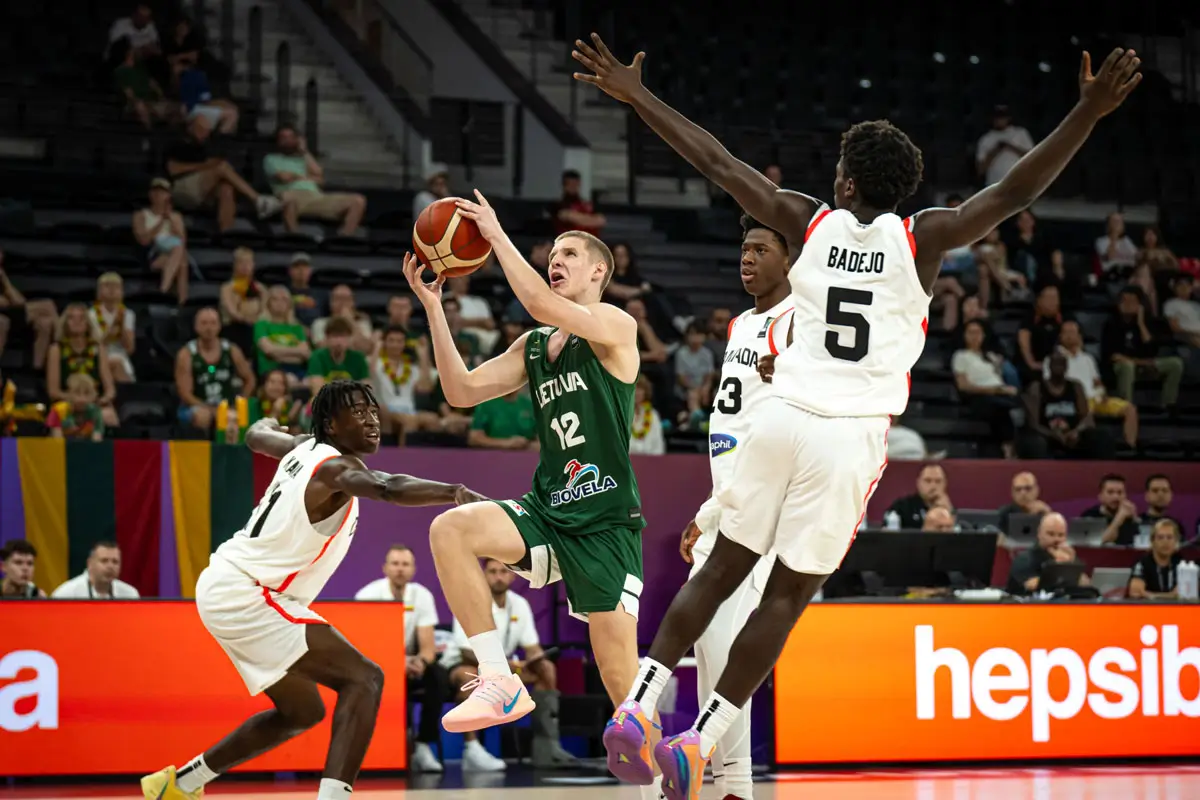
Coming off the bench, six-foot-three small forward Jokubas Kukta (Žalgiris Basketball Academy) delivered one of the standout performances of the opening day. He finished with 29 points, 10 assists and eight rebounds in fewer than 26 minutes, repeatedly dictating tempo and punishing Canadian lapses in transition.
Kukta’s influence extended beyond scoring. Each Canadian push was met with a response from him—whether attacking the rim, creating for teammates, or settling Lithuania’s offense during momentum swings.
The Eastern Europeans’ bench proved decisive overall, outscoring Canada 50–31, with Kukta at the centre of that advantage. He was supported by 19 points from Lukas Siskauskas and 18 from Gabrielius Buivydas as Lithuania steadily pulled away in the closing minutes.
Liam Mitakaro led Canada with 22 points, four rebounds and three assists in 26 minutes of action, despite shooting 9-for-22 from the field and 3-for-9 from beyond the arc. Isaiah Clarke added 12 points, while Isaiah Hamilton chipped in 11 points, including three three-pointers and an alley-oop finish that highlighted Canada’s early energy.
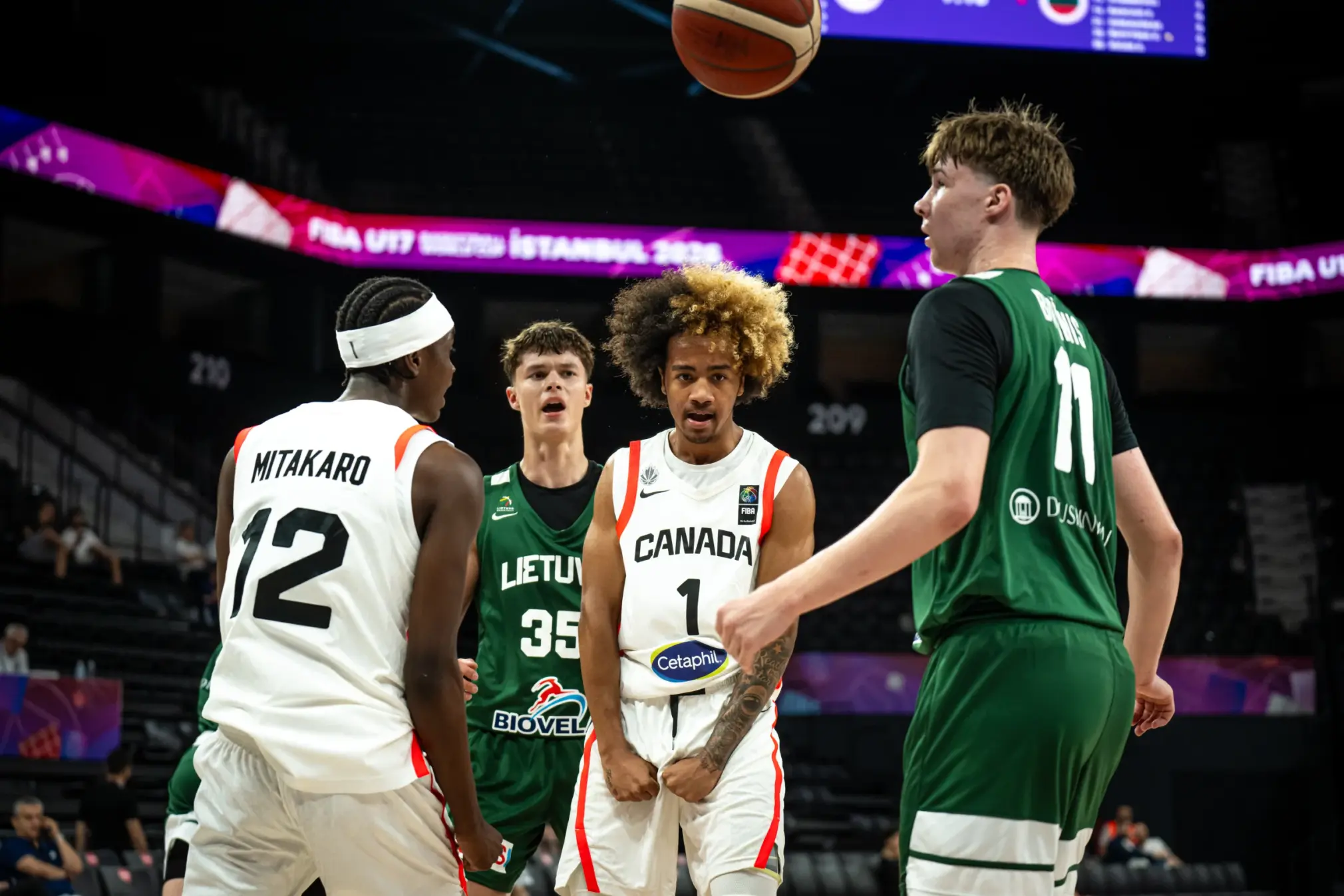
Kenyon St. Louis delivered one of Canada’s most complete performances, finishing with 11 points, seven assists, five rebounds and two steals in a game-high 28 minutes. Despite shooting 5-of-14, he functioned as a secondary creator throughout, helping stabilize Canada’s half-court offence and generating rhythm during their third-quarter surge. Tristan Edwards added 12 rebounds in an active effort on the glass.
The numbers reflected the gap in execution. Canada shot just 34.8 percent from the field, while Lithuania finished above 45 percent. Lithuania also held a 52–50 rebounding edge and recorded 22 assists to Canada’s 14, margins that became increasingly decisive as the game tightened late.
Canada did show signs of structure and scoring depth, particularly during their third-quarter run, but their inability to maintain defensive discipline and shot quality once Lithuania adjusted proved decisive.
Canada’s tournament history reflects both promise and recurring inconsistency. Since debuting at the inaugural U17 World Cup in 2010, the program has compiled a 32–20 record and captured a bronze medal in its first appearance. That run included one of its most memorable victories — an 83–81 win over Lithuania in the third-place game after falling to the United States in the semifinals.
Since then, the Canadian’s results have been uneven in the tournament’s biggest moments. While the program has produced strong wins over Australia, Spain and Germany in group play across multiple editions, it has often struggled to sustain that level in knockout settings. The introduction of the Round of 16 in 2016 only sharpened that contrast, with Canada suffering elimination losses to Turkey, Spain and now Lithuania, alongside heavy defeats to the United States in 2018 and 2024.
Against that backdrop, the opening loss carries added weight in Group B. Canada remains in a favourable structural position, as all four teams advance to the Round of 16, but seeding will determine crossover matchups against Group A, where the United States, France, Italy and Japan await. Finishing in the top two remains important to avoid an early meeting with the tournament’s strongest contenders.
The loss immediately shifts attention to Canada’s remaining group-stage schedule. They face China next, a team they are 4–0 against at the U17 World Cup since 2010, before closing group play against Cameroon on June 30. While all teams advance, Canada’s positioning will determine the difficulty of their knockout pathway.
The challenge is now less about survival than positioning. Against Lithuania, Canada showed they can generate runs and compete physically with elite opposition. What they could not do was sustain execution when the game shifted into its most decisive moments.
That distinction continues to define Canada’s U17 profile: competitive across stretches, but still searching for consistency when closing against the world’s best.